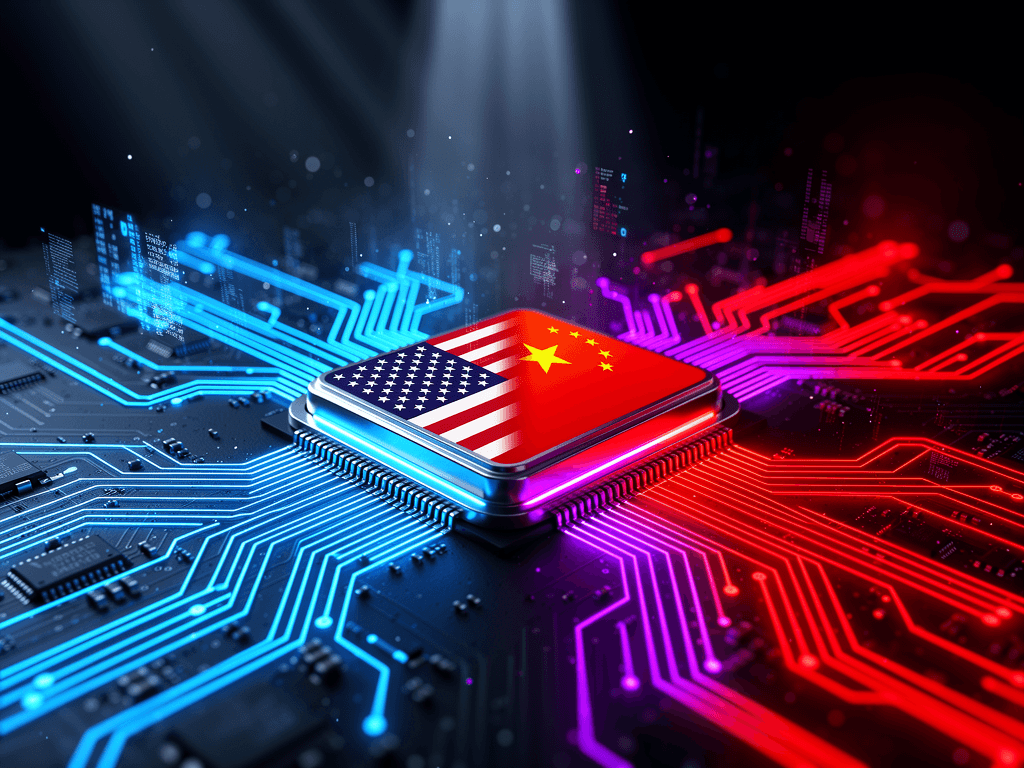
Trump Greenlights Nvidia H200 Chip Sales to China in Major Policy Reversal
President Donald Trump announced Monday that Nvidia will be permitted to sell its advanced H200 AI chips to China, reversing export restrictions imposed by the Biden administration over national security concerns. The decision marks a dramatic shift in U.S. tech policy and has sparked immediate debate about its implications for the AI race between the world's two largest economies.
The Deal Structure
Under the new arrangement, Nvidia can ship H200 chips to "approved customers" in China, with 25% of sales revenue going to the U.S. government. Trump stated that Chinese President Xi Jinping "responded positively" to the proposal.
Key parameters of the deal:
- H200 chips only — Nvidia's more advanced Blackwell and upcoming Rubin systems remain restricted
- Approved customers — The Commerce Department will vet purchasers
- 25% revenue share — Paid directly to the U.S. government
- Extended to competitors — AMD, Intel, and other American chipmakers will receive similar treatment
"We applaud President Trump's decision to allow America's chip industry to compete to support high paying jobs and manufacturing in America," an Nvidia spokesperson said. "Offering H200 to approved commercial customers, vetted by the Department of Commerce, strikes a thoughtful balance that is great for America."
The H200's Capabilities
While not Nvidia's most advanced chip, the H200 represents significant computational power. According to the Washington-based Institute for Progress:
- 6x more powerful than the H20 chip previously approved for China export
- Generation behind Blackwell — Nvidia's current flagship architecture
- Optimized for AI training — Particularly large language models and generative AI
The Biden administration had confined Nvidia and other chipmakers to exporting heavily downgraded versions of their products to China. The H20, specifically designed for the Chinese market, offered substantially reduced performance to address national security concerns.
Analyst Concerns
The decision has drawn sharp criticism from technology policy experts who argue it undermines American AI leadership.
"This move is giving China a bunch of advanced AI compute it wouldn't otherwise have," said Tim Fist, director of emerging technology at the Institute for Progress.
The think tank published a report estimating that the U.S. advantage over China in AI compute would diminish from approximately 10x to at most 5x if H200 exports proceed at scale.
Critics point to several risks:
- Military applications — Advanced AI chips can accelerate weapons development and autonomous systems
- Economic competition — Chinese AI companies gain access to hardware previously unavailable to them
- Technology transfer — Even approved customers could redirect chips to restricted entities
Supporters' Arguments
Proponents of the policy shift argue that restrictions were ineffective and economically damaging:
- Revenue for American companies — Nvidia and competitors recapture a massive market
- Government revenue — The 25% cut provides direct federal income
- Inevitable leakage — Smuggling networks were already circumventing controls (see: DOJ's Operation Gatekeeper)
- Allied coordination — Unilateral U.S. restrictions pushed customers to non-American alternatives
The timing is notable: this announcement came the same day the Department of Justice revealed it had busted a sophisticated smuggling network that moved $160 million worth of H100 and H200 chips to China through fake company labels and straw purchasers.
Market Implications
Nvidia's stock responded positively to the announcement, with investors anticipating substantial revenue from the reopened Chinese market. China represented one of Nvidia's largest markets before export restrictions, and pent-up demand for AI training hardware is significant.
The deal also signals potential shifts in how the U.S. approaches tech export policy more broadly — moving from blanket restrictions toward revenue-sharing arrangements with government oversight.
What's Next
The Commerce Department is finalizing details of the export framework, including:
- Customer vetting procedures
- End-use monitoring requirements
- Revenue collection mechanisms
- Extension to other chipmakers
The policy represents a calculated bet that controlled access with financial benefit outweighs the risks of providing China with advanced AI capabilities. Whether that calculation proves correct will become clear as Chinese AI development progresses in the coming years.
For now, the AI chip market has fundamentally changed. American semiconductor companies are back in the China game — with the U.S. government taking a cut of every sale.